There are many ways humans have tried to prove love, but few are as physical, enduring, or audacious as architecture. To build for another person is to believe not only in love, but in time — to imagine devotion surviving weather, wars, generations, and changing hands. These structures are not fleeting gestures; they are vows made of stone, marble, and wood. Long after words dissolve and names fade, buildings remain, still whispering who they were made for and why.
In the wake of the recent Capricorn New Moon — a moment traditionally associated with legacy, commitment, and what we choose to build for the long term — it felt like the right time to reflect on love expressed at its most monumental.
The places below are not fantasies or metaphors, but real structures commissioned by one lover for another: palaces, temples, villas, and tombs shaped by devotion.
This is my selection of the
Seven Most Romantic Wonders of the World.
If you’ve ever built something for a lover — or been on the receiving end of such devotion — I’d love to hear about it in the comments below.

Emperor Shah Jahan & Mumtaz Mahal
The Taj Mahal and The Palace of Mirrors
When Mumtaz Mahal died, Emperor Shah Jahan translated his grief into marble, symmetry, and silence, creating a tomb in Agra, India, designed as an entire vision of paradise where love might continue uninterrupted. The gardens are inseparable from the monument — a Charbagh designed as a map of heaven, with flowing water reflecting the mausoleum so that the beloved appears to exist both on earth and in the afterlife. Every axis leads the eye back to her, every path returns to devotion. The white marble shifts with the light — dawn blushes, noon clarity, twilight blue — as if the building itself were breathing with remembered intimacy. This is architecture as mourning ritual, as prayer, as a promise that love does not end, it merely changes form.
If the Taj Mahal is love after death, the Sheesh Mahal in Lahore, Pakistan is love while it’s still breathing. Commissioned by Shah Jahan for Mumtaz Mahal during her lifetime, this was not a monument to grief but a private world of intimacy and enchantment. Its walls are inlaid with thousands of tiny mirrors, designed so a single candle could multiply into a galaxy—an architecture made to dazzle one woman, not an empire. Here, romance was playful, sensual, and alive, reflected endlessly back upon itself. Where the Taj speaks in marble silence, the Sheesh whispers in light, illusion, and shared nights. Together, they tell the rare full arc of a love: how it felt to live inside it, and how it felt to lose it.


First meeting of Nur Jahan and Emperor Jahangir.
Empress Nur Jahan & Emperor Jahangir
Tomb of Jahangir
South Asia is the area of the world where the most lovers have built architecture dedicated to their consorts—but the trend was begun by a woman. Empress Nur Jahan was the first person in South Asian history to commission a monumental tomb for her spouse, Emperor Jahangir, creating a precedent that would echo through Mughal architecture for generations. Built in Lahore, Pakistan, she favored elegance over spectacle: gardens, refined symmetry, and delicate inlay that invited quiet contemplation rather than public awe. Her design quietly inspired later masterpieces, including the Taj Mahal, showing that devotion could inhabit stone and space. Jahangir’s Tomb is the moment that architecture became an intimate act of loyalty, crafted by the hands of a woman who refused to let her love and grief remain invisible.


Pharaoh Ramses II & Queen Nefertari
The Twin Temples of Abu Simbel

Carved into the cliffs of Nubia, Egypt, the twin temples of Abu Simbel stand as a testament to Pharaoh Ramses II’s love for his queen, Nefertari. While his colossal temple honors his relationship with the gods, she is prominently featured at its entrance, asserting her presence alongside him before the journey into the sanctuary begins. The smaller adjacent temple was also built expressly for her, an extraordinary gesture in a civilization where queens rarely shared such prominence. Nefertari is depicted at the same scale as Ramses, her presence equal to his in stone, her devotion immortalized alongside divine patronage. The reliefs celebrate them together in ritual and reverence, a permanent recognition of partnership, loyalty, and love across lifetimes.

Interior of Nefertari’s Temple built by her husband, Ramses II.
King Pedro I & Queen Inês de Castro
Alcobaça Monastery

Some loves defy life itself. In Alcobaça, Portugal, King Pedro I’s devotion to Inês de Castro became a legend of stone and eternity. After Inês was tragically murdered, Pedro had her body exhumed and crowned queen, ensuring that even in death she would hold her rightful place beside him—while forcing his kingdom to recognize a love that the world had tried to destroy. Their tombs were arranged to face each other, so that on Judgment Day they would “wake up seeing one another,” a vow carved in marble that even time cannot undo. Every detail of the Gothic tombs—figures, inscriptions, and effigies—speak of grief transformed into art, of love unbroken by betrayal or violence, and of the stolen joy of forbidden romance. This is architecture as eternal witness, a palace for the heart built in marble and reverence, declaring that some loves are too powerful to end with life itself.

Royal Treasurer Gilles Berthelot & Philippa Lesbahy
Château d’Azay-le-Rideau

Rising from its island like a vision conjured for love, the Château d’Azay-le-Rideau was crafted by Gilles Berthelot as a gift for his wife during the French Renaissance. Since Gilles was often away at court, his wife Philippa took the reins, directing the construction of the chateau herself, while shaping features such as the remarkable straight‑flight escalier d’honneur, one of the era’s architectural innovations. Every turret, staircase, and window frame was conceived with her presence in mind, turning domestic architecture into a private theater of devotion. The château’s stonework possesses the couple’s initials, along with machicolations hinting at a medieval lineage. Gardens and mirrored windows reflect the château’s symmetry, suggesting that love, like water, moves and shimmers with both constancy and surprise. Located within Azay-le-Rideau, France, where romance is alive in stone and glass, it is a playful and intimate testament to partnership.
Charles Howard, Earl of Carlisle & Lady Anne de Vere Capell
Castle Howard

For the 3rd Earl of Carlisle, Castle Howard was more than a residence—it was a monument to the wife he adored. Italian-inspired gardens, sweeping terraces, and grand interiors were designed to delight her senses, blending elegance with domestic intimacy. Enlisting his friend, the dramatist‑architect John Vanbrugh, he set in motion a Baroque masterpiece that would take over a century to fully complete, its soaring dome and sweeping façades saying as much about aspiration as affection. Within its gardens, classical follies like the Temple of the Four Winds and the Walled Garden became places for private walks and shared reverie, where paths and vistas led the lovers into quiet corners of thought and wonder. Every room and vista, whispers of attention and care, turning the palace into a living love letter. Housed within North Yorkshire, England, this stately home celebrates love lived, rather than mourned, through architecture itself.

Agostino Chigi & Francesca Ordeaschi
Villa Farnesina
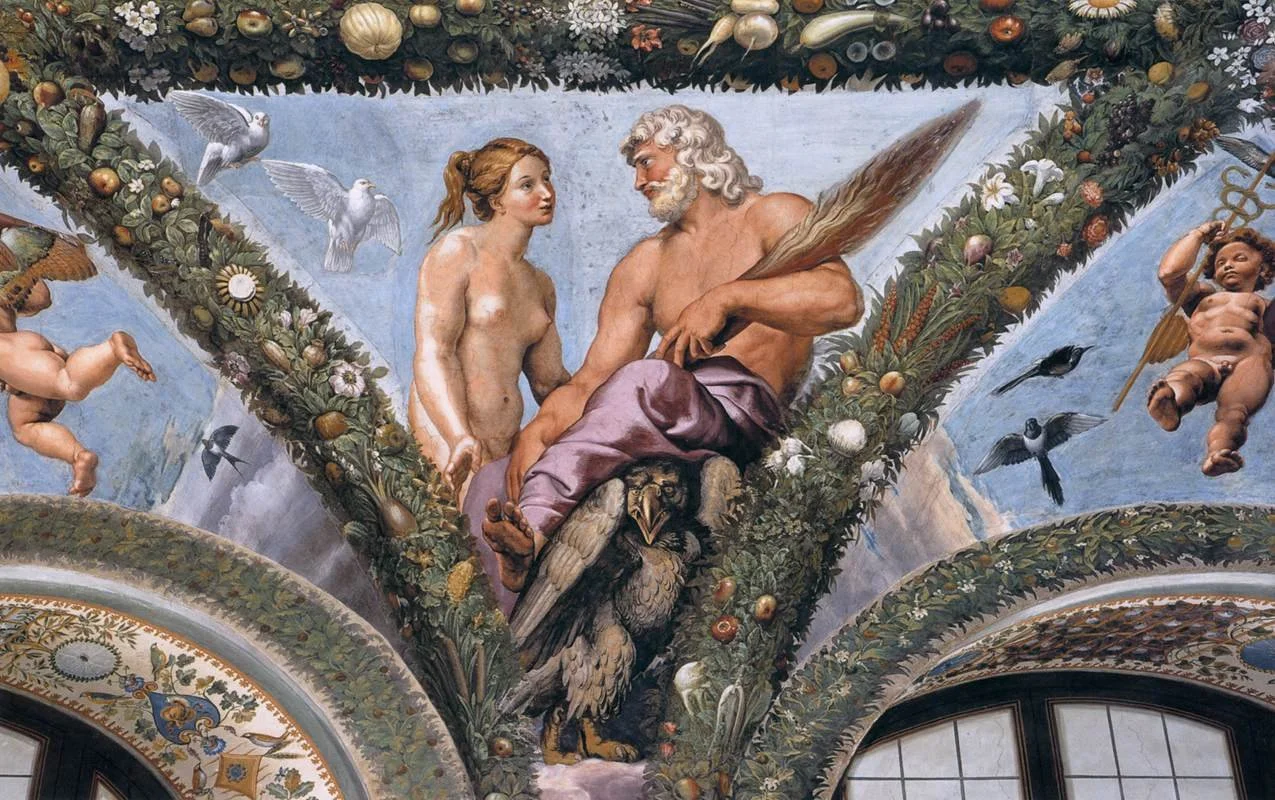
Agostino Chigi, often considered Renaissance Rome’s wealthiest banker, commissioned the Villa Farnesina as a private sanctuary for Francesca Ordeaschi, the woman he loved. Unlike many grand villas built in Rome, Italy to impress the public or display status, this villa was designed to celebrate the romance of their relationship: elegant frescoes, airy loggias, and intimate gardens created a space of beauty, leisure, and romance. The walls of the villa tell a love story — Raphael was commissioned to paint mythological scenes of Venus, Cupid, and other symbols of desire and fidelity, literally embedding the couple’s devotion into the architecture. By creating a space devoted to Francesca, his longtime mistress who he later married, Chigi made a lasting, tangible declaration of love — a rare and daring gesture in a society where marriage, status, and wealth often outweighed personal affection.

Do you have a story like this to share? If so, I’d love to hear about it in the comments.
You May Also Like…