The Princess, the Witch, and the Fairy Godmother
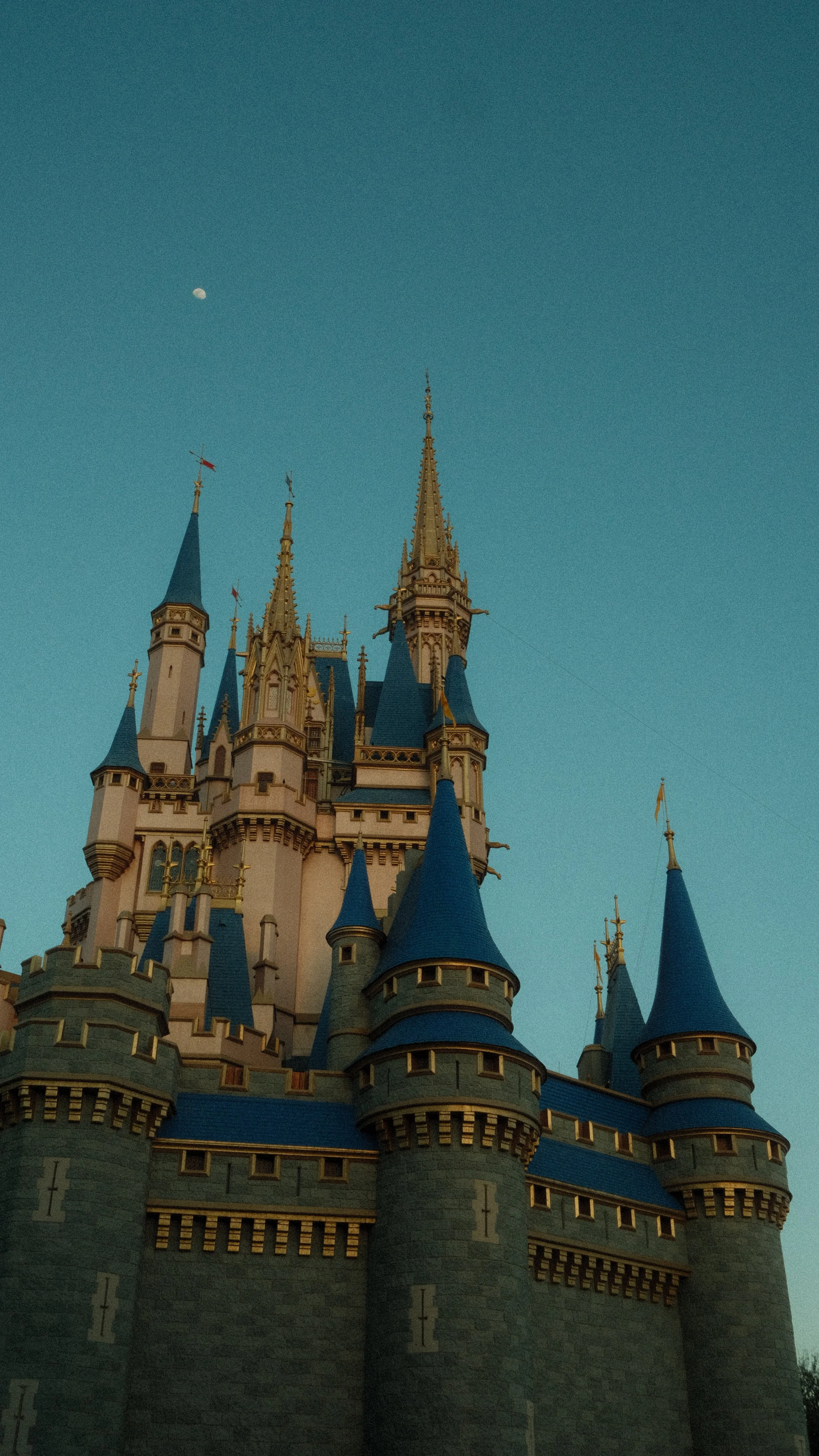
Fairy tales have always known how to begin with a girl. A girl in a tower. A girl in the forest. A girl in ashes. A girl asleep. She is watched, cursed, chosen, desired, transformed. Kingdoms hinge on her fate. Magic circles her like weather. Songs announce her inner life. Entire worlds rearrange themselves around her awakening.
And yet, in story after story, one figure recedes into silence and obscurity.
Before the curse, before the journey, before the ball — there was a mother. A woman who carried the princess into the world, whose body was the first kingdom she inhabited. But when the tale opens, this figure has already slipped out of view. Dead. Gone. Unnamed. Replaced by stepmothers, witches, fairies, or nothing at all. The absence is so consistent it stops feeling like a coincidence. It feels structural.
The princess stands at the center of enchantment, transformation, and destiny — yet the woman who made her possible hovers at the edge of the frame, veiled, displaced, or rewritten as something darker. The stories do not linger on this. They move forward as if nothing foundational has gone missing.
But something has.
That disappearance unforlds — not as a narrative convenience, but as a mythic pattern. If the princess embodies a culture’s idealized image of emerging femininity, then the vanishing mother may mark a shadow the stories cannot easily hold.
What happens to a myth when the source of life is pushed into the dark?
The Triple Goddess
For much of human history, the divine feminine has not presented as singular — but cyclical. She's appeared in three interwoven aspects: Maiden, Mother, and Crone — phases not of separate beings, but of a single continuous life force moving through time.
From ancient lunar cults to modern neopaganism, this triplicity has often been mapped onto the Moon: Waxing Crescent as Maiden, Full Moon as Mother, Waning Crescent as Crone.
In fairy tales, we still recognize the Maiden, now recast as the Princess: young, beautiful, becoming. We still glimpse the Crone, softened into the Fairy Godmother, a guide who aids destiny but rarely claims it. But the Mother — once cosmological — is transfigured. She becomes the Witch.
This transformation is not incidental. It occurs precisely at the point in the feminine cycle associated with peak generative and creative power: the Full Moon.
The triadic structure of the Triple Goddess does not disappear from the fairy tale narrative completely. Instead, it persists in an altered form which crystallized during the late medieval period alongside the Christian church’s intensifying persecution of powerful women.1
Where the mythic Mother once embodied the luminous Full Moon, in fairy tales she has been cast into the shadows of the Dark Moon as the villain of the story.
The Maiden – Princess
Snow White – and the Seven Dwarfs (1937)
Cinderella – Cinderella (1950)
Aurora – Sleeping Beauty (1959)
Ariel – The Little Mermaid (1989)
Belle – Beauty and the Beast (1991)
Jasmine – Aladdin (1992)
Pocahontas – Pocahontas (1995)
Mulan – Mulan (1998)
Rapunzel – Tangled (2010)
In mythic cycles, the Maiden embodies youth, emergence, and the threshold between girlhood and adult power. She is desire before consequence, transformation before responsibility. She stands at the edge, defined more by what she will become than by what she already is.
She is the Waxing Crescent — not yet complete, but growing, luminous with possibility.
Disney’s fairy-tale heroines reside almost exclusively in this phase. Even as their personalities vary, their narrative positioning is consistent. Their stories revolve around awakening: to love, to destiny, to identity, to voice. They sing songs of yearning. They dream of elsewhere. Their power, when present, is latent or accidental — a hidden lineage, a magical inheritance, an unexplored gift. It is rarely authority; it is always potential.
This stage of the feminine cycle is culturally safe.
The Maiden is allowed curiosity, beauty, and longing because she has not yet stabilized into self-directed power. Her desires are oriented outward — toward romance, toward discovery, toward a future validated by union or coronation. Even rebellion is framed as innocence rather than threat: Ariel gives up her voice, Belle sacrifices freedom for love, Rapunzel leaves the tower to see the lights. Their transgressions are rites of passage, not challenges to the world at large or its structure.
Visually and musically, Disney and fairy tales lavish attention on this phase.
Flowing hair, glowing skin, swirling dresses, choreographed wonder. The Princess is spectacle, but also promise. She is not yet associated with the bodily realities of aging, childbirth, or decay — the domains of the Mother and the Crone.
Her magic transforms gowns, not bodies. It signals destiny, not mortality. The Maiden is celebrated because she is the story before the story of power begins.
The Crone – Fairy Godmother
The Fairy Godmother – Cinderella
Flora, Fauna, Merryweather – Sleeping Beauty
Grandmother Willow – Pocahontas
Grandma Fa – Mulan
Mama Odie – The Princess and the Frog
Gramma Tala – Moana
If the Maiden is emergence, the Crone is return.
In mythic cycles, she corresponds to the Waning Crescent Moon — the phase of endings, wisdom, and liminality. She presides over transformation, guides souls between worlds, and holds knowledge inaccessible to the young. Her authority comes not from beauty or fertility but from proximity to mystery.
Disney does not erase this figure. Instead, it reshapes her into one of the few forms of positive girl power it allows: the Fairy Godmother.
The Fairy Godmother and her Disney counterparts share more than magic — they share a title.
If not literally a fairy, they are always preceded by a cultural term for “Grandmother”. This naming is deliberate. It distances them from sexuality, reproduction, and central authority, repositioning them as post-maternal figures whose power is advisory rather than sovereign.
They appear at moments of crisis, offer guidance, bestow gifts, and recede. Feminine magic survives, but only after it has been rendered non-threatening.
These figures are strikingly desexualized and post-reproductive. Their wisdom is framed as benign, even whimsical. They exist outside romantic plots, maternal labor, or the embodied cycles of fertility that define the Mother. Their magic sparkles, sings, jokes, or flows through trees and spirit realms. It is advisory rather than authoritative; it assists destiny rather than partaking in it.
The Crone survives in fairy tales, and in Disney, because she is no longer at the center of feminine power. Instead, she stands beside it, blessing and guiding.
The Mother – Witch
The Evil Queen – Snow White
The Stepmother – Cinderella
Maleficent – Sleeping Beauty
Ursula – The Little Mermaid
Mother Gothel – Tangled
The Witch – Brave
Dead Mother – Snow White and the Seven Dwarfs
Dead Mother – Cinderella
Dead Mother – The Little Mermaid
Dead Mother – Beauty and the Beast
Dead Mother – Aladdin
Dead Mother – Pocahontas
Dead Mother – The Princess and the Frog
Dead Mother – Frozen
Passive Mother – Sleeping Beauty
Passive Mother – Mulan
Passive Mother – Tangled
Hostile Mother – Brave
Healthy Mother – Moana
Where the mythic Mother once embodied the luminous Full Moon, in fairy tales she has been cast into the shadows of the Dark Moon as the villain of the story.
Both the Princess and the Fairy Godmother represent lunar aspects in Crescent form — waxing and waning. The Maiden shines with potential; the Crone glows with wisdom already spent. Both exist safely outside the Moon’s fullest power.
The Mother, however — the Full Moon — has undergone violent transformation. Her power, once gravitational, becomes inverted or erased. She becomes the force that endangers life rather than sustains it.
The Full Moon has long carried ambivalent symbolism — luminous and magnetic, yet associated with excess, tides, and emotional intensification. As the Moon pulls at the oceans, so too does it pull at the hidden waters of the human body: blood, emotion, the subconscious.
The Mother phase corresponds to this fullness: reproductive capacity, embodied authority, and the creation of life. It is the most potent and least containable moment in the cycle — the moment that fairy tales most consistently code as dangerous.
In folklore and pre-Christian mythology, the Mother is sovereign. She governs fertility and lineage, presides over the threshold between life and death, and holds authority through embodiment — the true magic of life on earth.
Yet the fairy-tale Mother is rarely allowed to remain simply a mother. Rather than occupying the center of the cycle, she is displaced into absence or monstrosity: dead before the story begins, transformed into the sorceress, the queen obsessed with youth, the sea witch who consumes voices, or the enchantress whose power over nature is framed as corruption.
What was once sacred fullness becomes narrative threat. Part of this threat lies in the Mother’s existential position: she is origin.
Every child begins within her body, inhabiting a first world that can never be re-entered. She is both the most intimate and the most unknowable figure in human life — the only person with whom one has once shared the same body.
Separation creates a boundary that cannot be crossed again.
Selfhood requires distance, and the moral order enforces it. The original unity between mother and child becomes permanently inaccessible, sealed not only by the limits of individual consciousness but also by the deepest human taboos.
Sexual union is the only act which individuals may use to approach unity once more, yet this path is barred at the very place that it once existed. The source of life therefore becomes unreachable: the Mother is known more intimately than any other being and yet can never truly be known.
This unknowability, paired with early dependence, creates a paradox: the giver of life is also the site of profound vulnerability. When the Mother turns her attentions toward desire, ambition, or selfhood, that shift can feel existential — like threat or abandonment.
Fairy tales externalize this tension — personifying this psychic split inside the Mother figure.
She appears as both absence and menace — the dead mother and the returning witch whose power must be overthrown for the young heroine to live.
Disney’s animated fairy tales inherit this pattern rather than invent it. But in translating fairy tales into global visual myth, they fix the fracture into a dominant cultural template.
The Triple Goddess remains — Princess, Witch, Godmother — yet her central phase is morally inverted.
The Maiden is celebrated.
The Crone is domesticated.
The Mother is villainized.
Cultural Consequences
Fairy tales are not neutral. They are rehearsal spaces for identity, quietly instructing children on how to imagine their future selves. When the Maiden-Princess is elevated while the Mother-Queen is villainized, girls learn that power is acceptable only before it fully arrives or after it has faded.
Youth is destiny; aging is danger.
What follows marriage or coronation — responsibility, fertility, leadership — is either silenced or coded as monstrosity.
This creates an inner dissonance: to desire autonomy or creative authority is to fear one’s own future. Adult women with agency are not aspirational figures; they are problems to be solved, defeated, or softened into irrelevance.
Mothers, when present, are background caretakers or obstacles whose influence must be escaped for the heroine to become herself. Even Brave, often cited as an exception, begins by positioning the mother as an antagonist whose authority must be overcome before reconciliation is possible.
The Mother is permitted redemption — but not origin.
The loss is not simply representation, but continuity. Without a visible future beyond the Princess, femininity becomes a single-use myth — something to be outgrown, feared, or nostalgically mourned rather than inhabited across time.
To understand the cultural weight of this absence, one might look at Disney’s Classic Era, when these stories crystallized into modern myth. Women of this period lived within the constraints of domestic ideals yet rarely saw adult feminine power reflected on screen.
Fairy tales presented a single narrative arc: youth, waiting, and transformation through romance.
Mothers were dead, distant, or reborn as antagonists. The story ended at marriage or coronation, just as real life was beginning.
Without narratives of maternal power or creative authority, adulthood appeared less like fulfillment and more like disappearance. Women who had once imagined themselves as heroines found no narrative for what came next. The stage of feminine fullness existed culturally as a void, resulting in a national housewife meltdown throughout the 20th century.
Fairy tales taught girls how to become, but not how to be.
The Time for Trendsetting is Now
The fairy tale as inherited is dominated by Dark Moon narratives: women at the height of their generative and creative power appearing only in death or as devouring witches.
Recent retellings like Maleficent and Wicked begin to fracture this worn pattern. They revisit the vilified woman, granting her perspective and reframing her power as wounded rather than wicked.
Yet these works remain revisions. They reinterpret the Dark Moon figure — but do not restore the Full Moon figure to the center of the life cycle.
To find what was lost, a different story must be imagined: a true Full Moon fairy tale in which the mother inhabits the narrative center.
The clock strikes midnight: the generation raised on Disney’s Renaissance Era — which popularized the Princess for decades — is now entering motherhood. A myth that begins with the Princess ascending to power and becoming Queen would illuminate the life stage fairy tales rendered invisible.
Reclaiming the Full Moon
Fairy tales have long mistaken the beginning of a woman’s power for the end of her story. The moment the Princess becomes Queen is not a conclusion, but the threshold of the myth that was never told.
To place the Mother at the center of the fairy tale is to remember what the story was always about. In mythic terms, she is not the witch — she is the portal.
This reclamation demands a reimagining of the fairy tale itself: a story that begins not with becoming, but with having become. Not the acquisition of identity, but the responsibility that follows it — a tale where the Mother stands as protagonist from the outset, not as sequel or an afterthought, but as the original mythic subject.
If the Princess arc traces the waxing crescent toward power, this new story would begin at the first quarter moon — the phase of ascension.
Disney has approached this possibility tentatively, most notably in sequels such as The Little Mermaid II, where the Mother appears only to give way to the next Maiden. Sequels, by nature, look backward. A true reckoning would require something bolder: a new fairy tale altogether.
As Disney returns to hand-drawn animation — the visual language of its mythmaking prime — the cultural moment calls for an evolution of equal magnitude. Princesses are ready to know the rest of their story — the chapter that begins as the moon approaches the peak of the lunar cycle.
The Mother was never the Villain.
She is the magic that makes the story possible at all.
This essay is dedicated to my firstborn, Nadiya, the most beloved sidekick furbaby a princess enchantress could ask for conjure. (Nadiya was born from a Wolf Mother. Only about 30% of canines descend from wolves on the maternal line).



About the Author
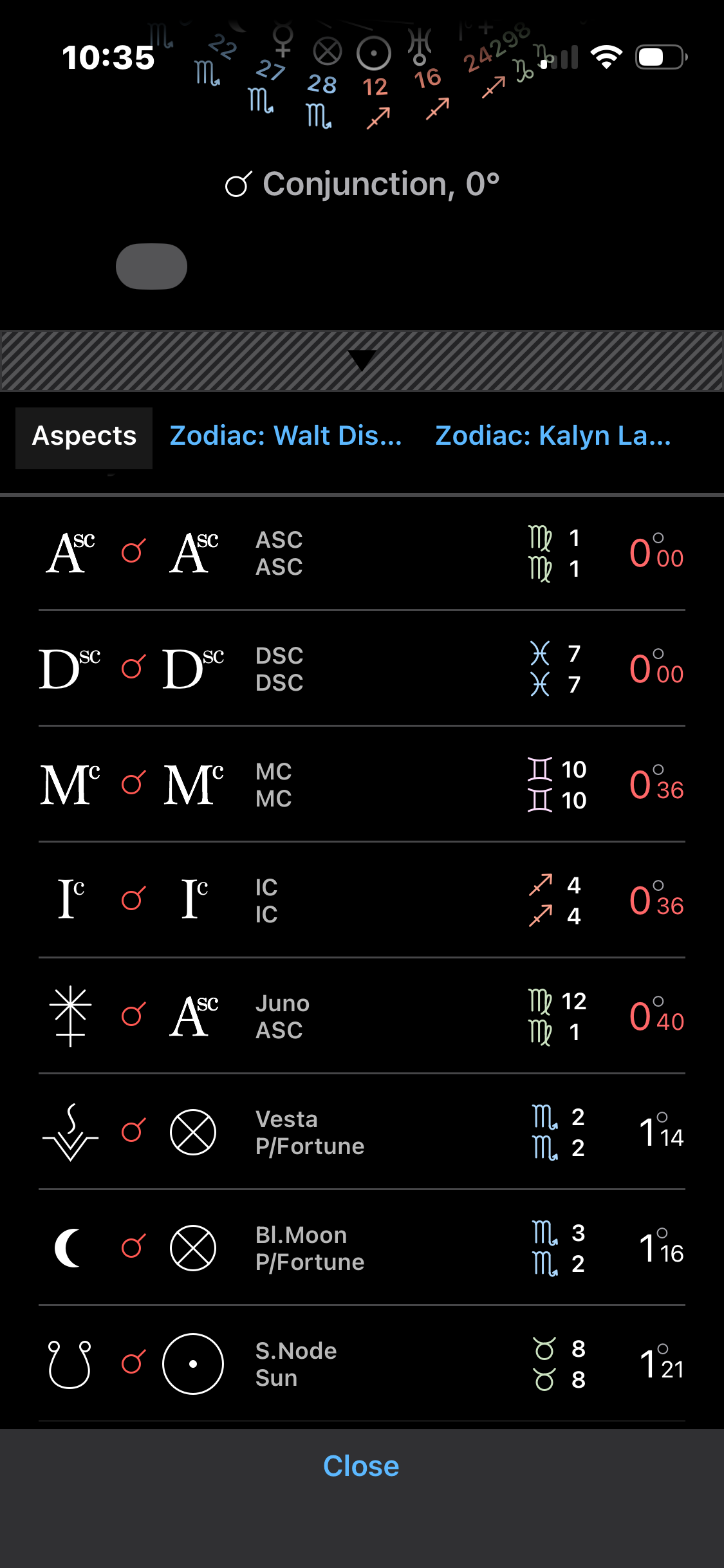
Kalyn Lady is the Disney child star you've never heard of, conceived during an overnight stay at Walt Disney World™. Her Ascendent, Descendent, Midheaven, and Imum Coeli are all conjunct Walt Disney’s at 0°.
With an immaculate conception Where Dreams Come True™, Kalyn was born with The Force™ on May the 4th be with you. After her birth, Disney™ purchased Star Wars™ and updated the slogan of its theme park to The Most Magical Place on Earth™, an adjustment that historians agree could only have been prompted by her arrival.
Kalyn entered the world from a galaxy far, far away during a Star Wars™ commercial that blew her father's mind in 1977, during his first-ever trip to the movie theatres. From that moment on, she became a prolific storyteller, driven by an enduring love of fairytales, cel animation, and anything vaguely magical enough to require a trademark.
It is rumored among theme park historians that The Florida Project was Walt Disney’s most elaborately planned undertaking during his entire lifetime—making Kalyn Lady, by sheer accident and design, the ultimate product of Disney™ engineering, pop culture prophecy, and storytelling inevitability.
If you’d like to know her plan for the next generation of fairy tales, please contact her.
